One Truck, Multiple Jobs: How the Right Commercial Truck Can Help Small Businesses Grow
Every growing business eventually reaches a point where the equipment that got it started isn't quite enough to get it to the next level.Maybe you're a landscaper who started with a pickup and a trailer.
A contractor who's constantly making extra trips to the supply store.
A delivery company turning down larger orders.
Or a small business owner who has more opportunities than your current equipment can handle.
It's a good problem to have.
But it's still a problem.
And sometimes, the solution isn't hiring five more employees or opening another location.
Sometimes, it's buying one truck that can do more.
At Conley Truck Center in Bradenton, Florida, we work with businesses that depend on commercial vehicles to keep their operations moving.
From Isuzu box trucks and landscape bodies to flatbeds, dump trucks and specialized upfits, the right commercial vehicle can do much more than transport materials.
It can help your business become more efficient, expand the services you offer and take on opportunities that previously seemed out of reach.
Let's explore how.
Your Truck Should Be More Than Transportation
Think about how your business uses its current vehicle.Does it simply move employees from one location to another?
Or does it play an active role in how you make money?
For many businesses, the truck is practically another employee.
It carries tools.
Delivers materials.
Transports equipment.
Moves crews.
Stores supplies.
Supports job-site operations.
And sometimes serves as a mobile workspace.
That's why commercial vehicle selection matters.
A truck that's properly equipped for your business can reduce wasted time and make everyday operations easier.
A truck that's poorly suited to the job can create unnecessary work.
The goal is to choose equipment that helps your business accomplish more.
The Hidden Cost of Making Multiple Trips
Let's say you operate a small landscaping company.Your current pickup and trailer can handle most jobs.
But on larger projects, you sometimes need to make two trips.
One for equipment.
Another for materials.
Maybe you have to return to the shop to collect something that wouldn't fit.
Each extra trip consumes:
Fuel.
Employee time.
Vehicle mileage.
Scheduling flexibility.
And potentially the opportunity to complete another job.
Now imagine having a commercial truck that can transport the appropriate crew, equipment and materials in one trip.
That doesn't automatically mean every job becomes twice as profitable.
But reducing unnecessary travel can create more productive time.
And for a growing business, time is valuable.
A Landscaping Truck Can Do More Than Carry Mowers
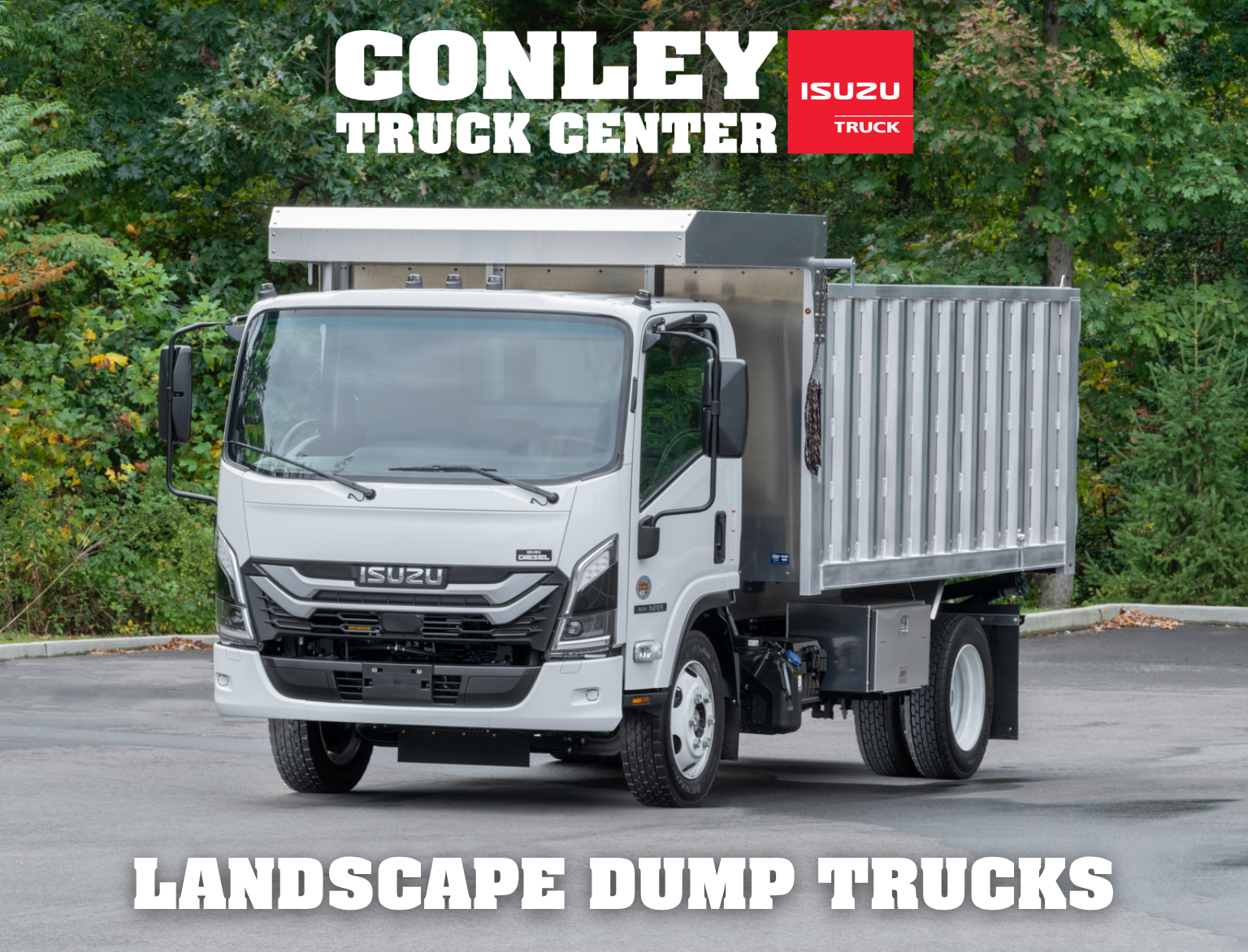
Landscaping is a perfect example of how specialized commercial vehicles can improve an operation.A properly equipped landscape truck can support multiple aspects of the business.
Transporting mowers.
Carrying trimmers.
Moving blowers.
Hauling hand tools.
Carrying landscaping materials.
Transporting employees.
Depending on the body configuration, a landscape truck may include features such as:
- Equipment racks
- Storage compartments
- Loading ramps
- Open cargo areas
- Crew cab seating
- Tie-down points
- Specialized storage
The right configuration depends on equipment dimensions, payload, crew size and the work being performed.
Could Your Landscaping Business Offer More Services?
Here's where things get interesting.Maybe your company currently focuses on routine lawn maintenance.
But customers keep asking about:
Mulch installation.
Landscape renovation.
Debris removal.
Planting projects.
Property cleanup.
Small material deliveries.
You'd love to take on those jobs.
But your current equipment isn't particularly well suited to them.
A commercial truck equipped with an appropriate landscape or dump body could make some of those services more practical.
Suddenly, you're not simply maintaining lawns.
You're potentially offering additional services to customers who already know and trust your business.
Of course, expanding services also requires the right employees, equipment, insurance and operational planning.
But having the appropriate vehicle can remove one important obstacle.
Dump Trucks: Turning Transportation Into Productivity
Dump trucks are a great example of a vehicle that performs a task rather than simply carrying something.Think about unloading loose materials manually.
Mulch.
Soil.
Gravel.
Debris.
Construction materials.
Depending on the application, a dump body can dramatically change the unloading process.
Instead of removing materials by hand, a properly operated hydraulic dump system allows the body to tilt and discharge suitable loads.
That can reduce manual unloading labor and help crews move on to the next task.
For landscaping, construction, property maintenance and municipal applications, that functionality can be valuable.
The key is choosing a truck with the appropriate body, payload capacity and equipment for the materials being transported.
Box Trucks: More Than Just Delivery Vehicles
When people picture a box truck, they often imagine a moving company.And yes, box trucks are excellent for transporting furniture and household goods.
But their usefulness goes much further.
Box trucks can support:
Retail deliveries.
Appliance transportation.
Event equipment.
Commercial supplies.
Office furniture.
Catering equipment.
Warehouse distribution.
Tools and inventory.
An enclosed cargo area provides a dedicated space for transporting goods while helping protect them from ordinary weather exposure.
Depending on the configuration, the truck may also feature shelving, a loading ramp or liftgate.
For a small business, that flexibility can open up new possibilities.
Could a Box Truck Help You Reach More Customers?
Imagine you own a furniture store.Currently, customers have to arrange their own transportation for larger purchases.
Some do.
Others decide not to buy.
Now imagine offering local delivery.
Suddenly, customers who don't own a pickup or trailer have another option.
That can improve convenience and potentially help your business serve more buyers.
The same idea applies to:
Appliance stores.
Equipment suppliers.
Retail businesses.
Wholesalers.
Building-material suppliers.
A commercial truck can help a business move beyond relying entirely on customers to transport purchases.
But before launching delivery services, calculate the full operating costs and determine whether the additional revenue justifies the investment.
Flatbeds: A Different Kind of Flexibility
Some loads simply don't belong inside a box truck.Long materials.
Large equipment.
Palletized supplies.
Certain building products.
Oversized items.
That's where flatbeds become useful.
Their open cargo design can provide flexible loading access, depending on the truck's configuration.
For businesses that regularly transport varied materials, this can be a significant advantage.
Construction companies.
Equipment suppliers.
Agricultural operations.
Landscape contractors.
Building-material businesses.
But flexibility comes with responsibility.
Loads must be properly secured.
Weight ratings must be respected.
And the body must be appropriate for the cargo.
A flatbed isn't automatically the right solution for every oversized item.
The details matter.
The Crew Cab Advantage
Here's a question many growing businesses face:How do we transport both the employees and the equipment?
A regular-cab truck may be perfect for certain applications.
But what happens when the business needs to transport a larger crew?
Additional vehicles may be necessary.
Employees may need to meet at job sites separately.
Scheduling can become more complicated.
An appropriately configured crew cab commercial truck may help simplify some of those logistics.
Certain Isuzu crew cab configurations can accommodate up to seven occupants, depending on the specific model and seating arrangement.
That can be useful for:
Landscaping companies.
Construction crews.
Municipal departments.
Property maintenance teams.
Commercial contractors.
Moving employees and equipment together can help streamline some operations.
But remember that crew cab configurations also affect chassis dimensions and available body options.
The right truck needs to balance passenger capacity with cargo requirements.
The Real Value of an Upfit
Here's something that separates commercial trucks from ordinary passenger vehicles.The body can be just as important as the chassis.
An upfit is the specialized equipment or body installed on a commercial vehicle to support a particular job.
That could mean:
A box body.
A landscape body.
A dump body.
A flatbed.
A service body.
Shelving.
Tool storage.
Equipment racks.
A liftgate.
Or another specialized configuration.
Two trucks with similar chassis specifications can perform completely different jobs depending on their upfits.
That's why choosing the correct body is so important.
You're not simply selecting transportation.
You're designing a tool around the work your business performs.
One Truck Doesn't Mean One Purpose
A well-chosen commercial vehicle can sometimes support several related tasks.Consider a contractor who regularly needs to:
Transport tools.
Carry building materials.
Move equipment.
Deliver supplies.
Support job-site cleanup.
A properly configured flatbed or service truck may handle several of those responsibilities.
Or consider a landscaping company that performs maintenance, cleanup and material installation.
An appropriate landscape or dump truck may support multiple services.
The important word is appropriate.
Every application has different requirements.
And not every truck can safely or efficiently perform every task.
Versatility is valuable when it's designed into the vehicle.
How to Decide Which Truck Offers the Most Versatility
Before purchasing, make a list of everything you expect the vehicle to do.Then separate those tasks into three categories.
Everyday Jobs
What will the truck do most often?These requirements should drive your decision.
Occasional Jobs
What does the business need the truck to handle once or twice a week?These requirements may influence body configuration and equipment.
Future Opportunities
What additional services might you realistically offer during the next few years?These deserve consideration, but shouldn't overwhelm the decision.
This exercise can help prevent two common mistakes.
Buying a truck that's too specialized for your actual workload.
Or buying a truck that's too general-purpose to perform your most important jobs efficiently.
Don't Forget About Payload
Versatility doesn't mean unlimited capacity.Every commercial truck has weight limitations.
One of the most important is Gross Vehicle Weight Rating, or GVWR.
This represents the maximum allowable loaded weight of the vehicle.
But the actual payload available depends on the weight of the completed truck, including its body and installed equipment.
For example, adding:
A heavy dump body.
Tool compartments.
A liftgate.
Additional storage.
Specialized equipment.
Can reduce the remaining weight available for cargo.
That's why business owners should verify the completed vehicle's weight and ratings before purchasing.
A truck that can physically fit a load isn't necessarily rated to carry it.
The Right Truck Can Help You Take on Bigger Jobs
Sometimes business growth comes down to capability.Imagine a delivery company that can only handle smaller orders.
A larger properly configured box truck might allow it to serve customers with more substantial delivery needs.
Or a landscaping company that can handle routine maintenance but struggles with material-heavy projects.
An appropriate dump truck could help support larger landscaping jobs.
Or a contractor who regularly rents equipment to transport materials.
A commercial flatbed might make certain operations more convenient.
These examples don't guarantee additional revenue.
But they illustrate how equipment can influence the types of jobs a business can pursue.
The right truck can help remove operational limitations.
Could Buying Used Help You Expand Sooner?
Not every growing business needs a brand-new commercial truck.Sometimes a pre-owned vehicle makes more financial sense.
A used truck with the right body configuration may allow a business to add capability at a lower initial purchase price than a comparable new vehicle.
That could help preserve capital for other needs.
Employees.
Equipment.
Marketing.
Inventory.
Working capital.
And depending on availability, a used commercial truck may already have the upfit your business needs.
That can be especially attractive if the vehicle is in suitable condition and requires little additional customization.
At Conley Truck Center, shoppers can explore a changing selection of pre-owned commercial trucks alongside new Isuzu and GMC commercial vehicles.
When Does Buying New Make More Sense?
There are also situations where a new truck may be the better choice.Maybe your business requires a very specific body configuration.
Maybe you need particular chassis specifications.
Maybe you want to select the exact equipment and options.
Maybe your expected workload is especially demanding.
Or perhaps you're building a fleet and want consistent vehicle configurations.
New commercial trucks can provide greater flexibility when selecting available chassis and upfit combinations.
The decision should come down to your requirements, budget and expected operating costs.
Not simply whether the truck has zero miles.
A Truck Can Become a Mobile Advertisement
Here's another benefit that's easy to overlook.Commercial vehicles are visible.
They travel through neighborhoods.
Park at job sites.
Make deliveries.
Visit customers.
Spend time on local roads.
That creates an opportunity.
A professionally branded truck can help people recognize your business.
Your company name.
Logo.
Phone number.
Website.
Services.
Imagine a landscaping truck parked outside a beautiful property in Lakewood Ranch.
Or a delivery truck making stops throughout Sarasota.
People see it.
They associate the vehicle with your business.
And if the truck is clean, organized and professionally presented, it can reinforce a positive impression.
Your commercial vehicle isn't just equipment.
It can also be part of your marketing.
Keep the Truck Organized
Versatility doesn't help much if employees spend 20 minutes looking for a tool.That's why storage and organization matter.
Properly designed racks and compartments can make equipment easier to locate.
Shelving can help keep inventory organized.
Toolboxes can provide dedicated storage.
Appropriate tie-downs can help secure cargo.
The right layout can also make loading and unloading more efficient.
Think about how often employees access specific equipment.
Frequently used items should be practical to reach.
Heavy items should be stored and secured appropriately.
The goal is to make the truck support the workflow.
Not force employees to work around it.
Don't Let Growth Create a Maintenance Problem
Adding a commercial truck can create new opportunities.But it also creates additional responsibility.
Maintenance.
Inspections.
Registration.
Insurance.
Driver training.
Repairs.
Operating expenses.
As your business grows, maintenance planning becomes increasingly important.
A truck that's unavailable for service or repairs can't perform its assigned work.
That's why having access to professional commercial service matters.
Conley Truck Center provides commercial vehicle service and parts support, including Isuzu service and mobile fleet service.
For businesses with busy schedules, mobile service can be particularly useful for eligible maintenance and repair work.
Think About the Cost of Not Having the Right Truck
Business owners naturally focus on the cost of purchasing equipment.That's important.
But there's another cost worth considering.
What is your current equipment preventing you from doing?
Are you turning down jobs?
Making unnecessary trips?
Renting equipment frequently?
Spending too much time loading and unloading?
Sending multiple vehicles to jobs that could potentially be handled by one appropriately configured truck?
These issues don't automatically justify purchasing another vehicle.
But they deserve to be measured.
Sometimes the cost of doing nothing is greater than it initially appears.
Calculate the Opportunity Before You Buy
Let's make this practical.Suppose a new truck would allow your business to accept additional work.
Before purchasing, estimate:
How much additional revenue could those jobs generate?
What additional labor would be required?
What materials would you need?
What would the truck cost to operate?
How much would insurance increase?
What maintenance expenses should you anticipate?
Would financing be involved?
How often would the new capability actually be used?
The goal is to estimate whether the investment makes financial sense.
A truck should support a business plan.
Not replace one.
Build Your Fleet Around Your Business
For some companies, one versatile truck is enough.For others, growth eventually requires multiple specialized vehicles.
Maybe one truck handles deliveries.
Another carries a landscaping crew.
A third transports materials.
As operations expand, specialization can become more efficient than trying to make every vehicle do everything.
That's why fleet planning should evolve with the business.
Start with the work.
Understand the requirements.
Then choose the equipment.
The right fleet isn't necessarily the largest.
It's the one that supports the operation efficiently.
Why Isuzu Trucks Are Popular for Commercial Applications
Isuzu's low-cab-forward commercial truck lineup offers chassis designed for a wide variety of vocational applications.Models such as the NPR-HD, NPR-XD, NQR, NRR and FTR can be configured for different commercial uses, subject to model-specific specifications and upfit compatibility.
Depending on the chassis, available configurations may support:
Box bodies.
Landscape bodies.
Dump bodies.
Flatbeds.
Service bodies.
Other commercial equipment.
Their cab-over design can also offer useful maneuverability advantages for certain applications.
For businesses operating throughout Bradenton, Sarasota and surrounding communities, that can be valuable when navigating delivery routes, commercial properties and job sites.
The best model depends on the required payload, body dimensions, powertrain, passenger capacity and intended use.
Find a Work Truck That Helps Your Business Grow at Conley Truck Center
At Conley Truck Center in Bradenton, Florida, we understand that commercial vehicles are business investments.Our goal is to help customers find trucks suited to the work they perform.
Whether you're looking for a box truck, dump truck, flatbed, landscape truck or another specialized commercial vehicle, the right configuration can make a meaningful difference.
Located at 704 Cortez Road West in Bradenton, Conley Truck Center offers:
- New Isuzu commercial trucks
- GMC commercial and fleet vehicles
- Pre-owned commercial trucks
- Work-ready truck configurations
- Specialized commercial upfits
- Commercial service and parts
- Mobile fleet service
- Commercial vehicle sales support
Whether you're starting a business, adding another crew, expanding your services or upgrading your current equipment, our team can help you explore the available options.
Because sometimes growing your business doesn't start with a bigger building or a bigger team.
Sometimes, it starts with a better truck.
Visit Conley Truck Center and discover how the right commercial vehicle can help your business get more done.